“High protein” is used broadly and does not have one universal meal-plan definition for everyone. Protein needs vary with age, body size, activity, pregnancy or breastfeeding, and individual health circumstances. For beginners, it is usually more useful to focus on including a dependable protein source in meals and varying those sources across the week than to chase a single number.
Build the week in five decisions
Before choosing seven different dinners or buying a cart full of unrelated protein foods, build the week around five practical decisions. The goal is organization and variety—not prescribing a universal protein amount.
Select a manageable mix of protein foods you actually enjoy and can prepare with the time you have.
Build complete meals around those choices with vegetables or fruit, grains or other carbohydrate foods as appropriate, and flavor.
Plan at least one protein food to appear in a second meal so cooking once saves work without making every meal identical.
Keep one low-effort protein-containing option available for the day when the original cooking plan no longer fits.
Buy from the plan: protein foods first, then the produce, staples, and flavor ingredients that connect them into meals.
The Plate & Plan rule: every protein food on the grocery list should have a planned job in the week.
1. Build the week around several protein options
USDA MyPlate includes seafood; meat, poultry and eggs; beans, peas and lentils; nuts and seeds; and soy foods such as tofu and tempeh in the Protein Foods Group. Dairy foods and fortified soy alternatives can also contribute protein as part of an overall eating pattern.
Using several options makes the plan easier to sustain and helps avoid relying on one food repeatedly. A simple week could include eggs, yogurt, chicken or fish, beans, lentils, tofu, nuts, and seeds in different combinations.
2. Pair protein with the rest of the meal
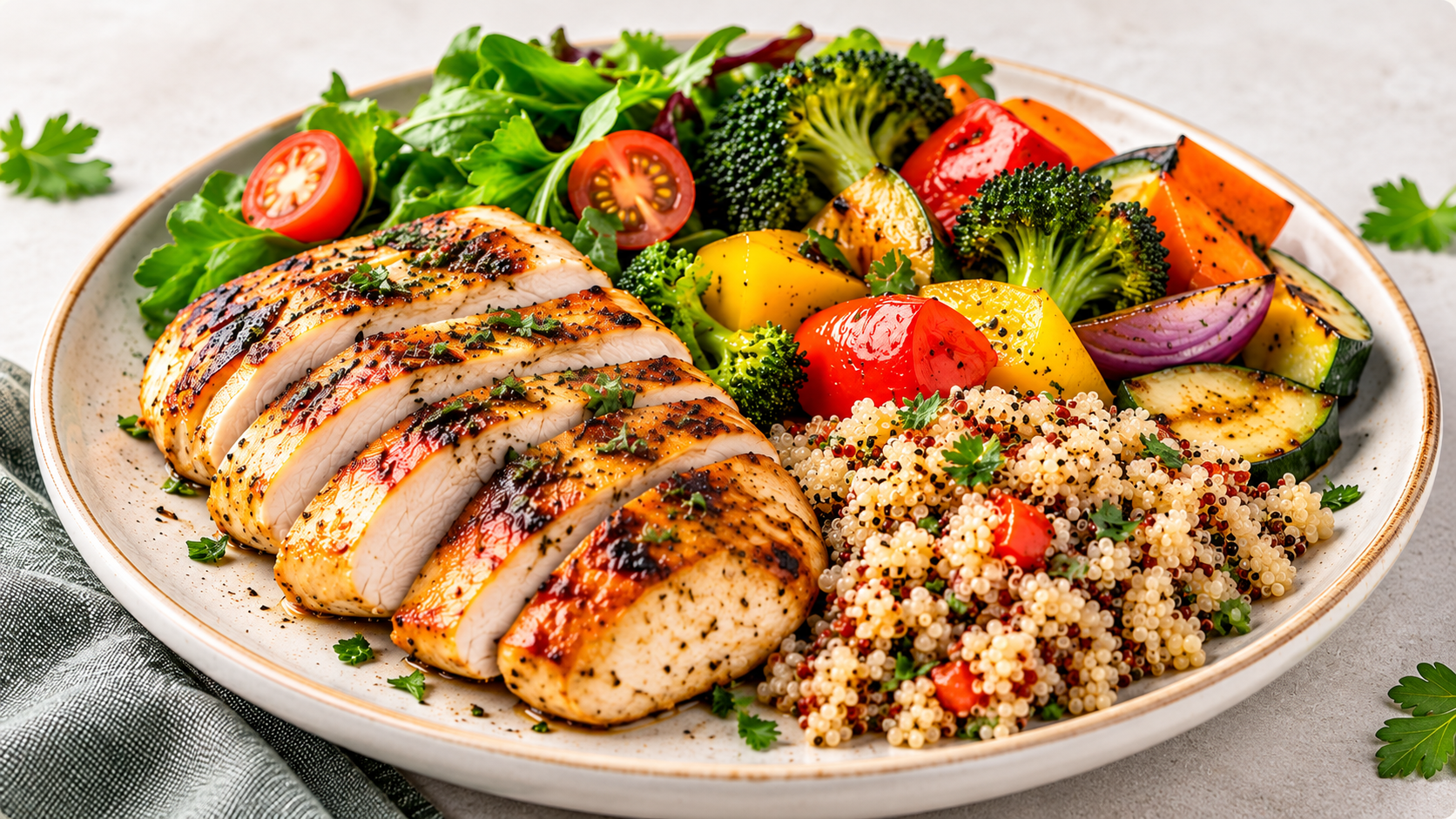
A protein-rich food is only one part of a practical meal. Add vegetables or fruit, a grain or other carbohydrate food when it suits the meal, and flavor from herbs, spices, sauces, nuts, seeds, or oils. This creates meals that are easier to enjoy and repeat.
3. Use plant proteins strategically
Beans, peas, lentils, nuts, seeds, and soy foods can make meal planning economical and flexible. They also bring different nutrients and textures to meals. Try black beans in tacos, lentils in soup, chickpeas in bowls or salads, tofu in stir-fries, or nut and seed butters with breakfast or snacks.
If you eat both plant and animal foods, mixing the two across the week can make the grocery list more varied. If you follow a vegetarian or vegan pattern, prioritize variety among plant protein sources rather than relying on one item.
4. Make breakfast easier to repeat
Breakfast is often where people have the least time. Instead of inventing a new meal every morning, choose one or two dependable combinations and repeat them. Examples include eggs with whole-grain toast and fruit, yogurt with oats and berries, or tofu scramble with vegetables and toast.
Prepare what helps: wash fruit, portion oats, boil eggs, or organize refrigerated ingredients so breakfast requires fewer decisions.
5. Cook once, use the protein twice
Batching one component can save time without turning the entire weekend into meal prep. Roast a tray of chicken or tofu, cook a pot of lentils, or prepare beans, then use that ingredient in two different meals. For example, chicken can become a grain bowl one day and a wrap the next; lentils can move from soup to a salad or bowl.
6. Keep a protein-rich backup option
Busy weeks need fallback meals. Keep a few ingredients that can become food quickly: canned beans or fish, eggs, frozen edamame, tofu, yogurt, lentils, nuts, seeds, or a freezer meal built around familiar ingredients. The point is to avoid having the plan collapse because one evening became too busy to cook.
7. Shop from a short master list
Before shopping, choose the protein foods for the week and then add produce, grains, pantry basics, and flavor ingredients around them. This helps prevent buying several unrelated proteins with no plan for how they will be used.
- Protein foods: choose a manageable mix of animal and/or plant sources.
- Produce: select vegetables and fruits that work in more than one meal.
- Grains and starches: rice, oats, whole-grain bread, pasta, tortillas, potatoes, or other staples you enjoy.
- Flavor: herbs, spices, sauces, citrus, nuts, seeds, or dressings.
- Backups: one or two low-effort foods for schedule disruptions.
For a broader shopping framework, use our healthy grocery list for beginners.
A simple 5-day protein-focused example
Baked salmon or tofu with potatoes and green vegetables.
Plan ahead → Prepare enough salmon or tofu for Tuesday.Grain bowl with leftover salmon or tofu, vegetables, and beans.
Planning move → Same prepared protein, different format.Turkey, bean, lentil, or tofu tacos with cabbage and salsa.
Variety move → Use a different protein anchor and shared produce.Egg, bean, or hummus-based quick meal with vegetables and whole-grain bread or wraps.
Backup move → Keep cooking demands deliberately low.Chicken, tempeh, or chickpea pasta dish with vegetables and a side salad.
End-of-week move → Use remaining vegetables or compatible ingredients before buying more.What this example demonstrates: the foods are flexible. The planning method is the important part—choose protein foods intentionally, reuse selected ingredients, vary the meal format, keep a backup option, and leave room for the week to change.
Do you need a specific protein target?
Some people benefit from individualized nutrition targets, but a universal “high-protein” target is not appropriate for everyone. If you need a precise amount because of athletic training, pregnancy, a medical condition, kidney concerns, recovery from illness, or another individualized situation, work with a qualified health professional who can account for your full circumstances.
A practical protein-planning matrix
Instead of starting with a supplement or a rigid number, choose options that match the time and equipment available. This original planning matrix helps keep the week varied.
| Situation | Animal-food option | Plant-food option | Meal use |
|---|---|---|---|
| No cooking | Yogurt, canned fish, or cooked eggs | Hummus, canned beans, nuts, or seeds | Toast, salad, bowl, or snack plate |
| Ten minutes | Eggs or leftover poultry | Tofu, edamame, or lentils | Scramble, wrap, or grain bowl |
| Batch cooking | Roasted chicken or baked fish | Pot of beans, lentils, or baked tofu | Two dinners plus planned leftovers |
| Freezer backup | Plain cooked poultry or fish portion | Edamame, bean-based soup, or veggie burger | Fast replacement for a disrupted meal |
Planning principle: This matrix is about organization, not prescribing a protein target. Individual requirements can differ substantially.
Sources and further reading
- USDA MyPlate — Protein Foods Group — examples of animal and plant protein foods and guidance to vary protein choices.
- Dietary Guidelines for Americans — federal healthy-eating guidance and resources.