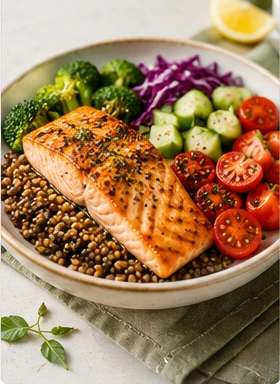
Meal prep becomes easier when you prepare a few flexible components instead of three unrelated recipes. This beginner plan uses one main protein food, one plant-based alternative, two grains or starches, and several vegetables to create three distinct days of meals.
The beginner component framework
A practical 60-minute preparation sequence
- Heat the oven and start the longest-cooking grain or starch.
- Season and cook the selected protein foods separately.
- Roast two vegetables on one tray and wash any raw produce.
- Mix one sauce and portion snacks or breakfast ingredients.
- Fully assemble Day 1; store the remaining components separately for better texture.
Three-day sample plan
Adjust portions to appetite, preferences, budget, and individual guidance. Swap animal and plant foods freely where appropriate.
| Day | Breakfast | Lunch | Dinner | Flexible option |
|---|---|---|---|---|
| 1 | Greek-style yogurt or soy yogurt, oats, berries, seeds | Chicken or tofu rice bowl with broccoli and lemon dressing | Lentil and roasted-vegetable potato bowl | Apple with peanut or seed butter |
| 2 | Eggs or tofu scramble with toast and fruit | Bean, rice, tomato, and greens salad with dressing | Chicken or tofu wrap with roasted vegetables | Yogurt or fortified soy alternative |
| 3 | Overnight oats with milk or soy beverage, yogurt, and seeds | Lentil potato bowl with greens | Rice bowl using the remaining protein and vegetables | Hummus with vegetables and crackers |
Consolidated grocery list
Check your pantry first, buy only the quantities you will use, and select lower-cost store brands or frozen produce when helpful. Our healthy grocery-list guide offers a broader shopping framework.
Storage and food-safety basics
- Refrigerate perishable cooked food promptly in shallow containers.
- Use most cooked leftovers within three to four days, following current USDA guidance.
- Keep packed perishable meals cold with refrigeration or an insulated bag and adequate cold sources.
- Reheat leftovers to 165°F (74°C) and discard food that was stored unsafely.
- Label containers with preparation dates and follow package-specific instructions.
How to personalize the plan
Start by changing only one variable: the protein food, sauce, grain, or vegetable. For vegetarian meals, combine varied foods across the day rather than assuming every meal needs a meat substitute. MedlinePlus notes that animal and plant foods can both provide amino acids, and that balance across the day matters more than consuming every essential amino acid at each meal.
For more structure, read our high-protein meal-planning guide. If the main difficulty is choosing a system, compare the personalized planner and recipe-app approaches.
Common beginner mistakes
- Preparing too many recipes: use components across several meals.
- Choosing only protein foods: include produce, grains or starches, and flavor.
- Assembling every container at once: store sauces and crisp items separately.
- Ignoring food safety: plan cooling, refrigeration, transport, and reheating.
- Following someone else’s protein target: individual requirements differ.
Frequently asked questions
Do I need protein powder?
No. Many people can assemble protein-containing meals from familiar foods. Supplements may be unsuitable for some people and should not replace individualized professional guidance.
Can the plan be vegetarian?
Yes. Use foods such as beans, lentils, tofu, tempeh, eggs, dairy foods, or appropriate alternatives according to your eating pattern.
Must I eat the same meals for three days?
No. The plan repeats components, not complete meals. Change the format and sauce to create bowls, salads, wraps, or snack-style plates.
Are the portions suitable for everyone?
No. Portions and protein needs vary. This article intentionally avoids personalized calorie, protein, or medical recommendations.
Sources and further reading
- USDA MyPlate: Protein Foods Group
- MedlinePlus: Protein in diet
- USDA FSIS: Leftovers and food safety
- USDA FSIS: Keeping bag lunches safe